Nasdaq Is Going 23 Hours. Does the Onchain Stock Narrative Still Hold?
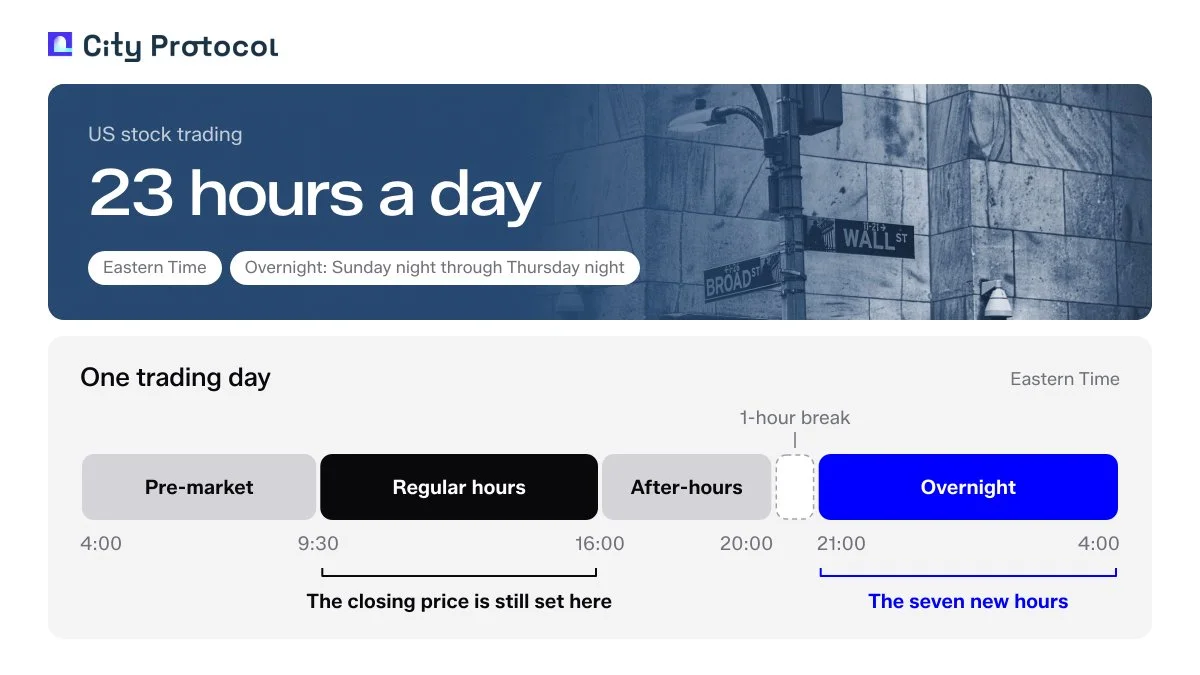
Nasdaq and NYSE Arca plan to add an overnight trading session starting December 6. From then on, US stocks will trade 23 hours every trading day, seven more than today. You'll be able to place orders between 10 a.m. and 5 p.m. Beijing time, too.
For years, the selling point people mentioned most for tokenized stocks was that you could trade them anytime. The US market closes, and onchain markets stay open. Nasdaq's move takes away most of that advantage.
But onchain stocks keep one difference that longer hours can't take away.
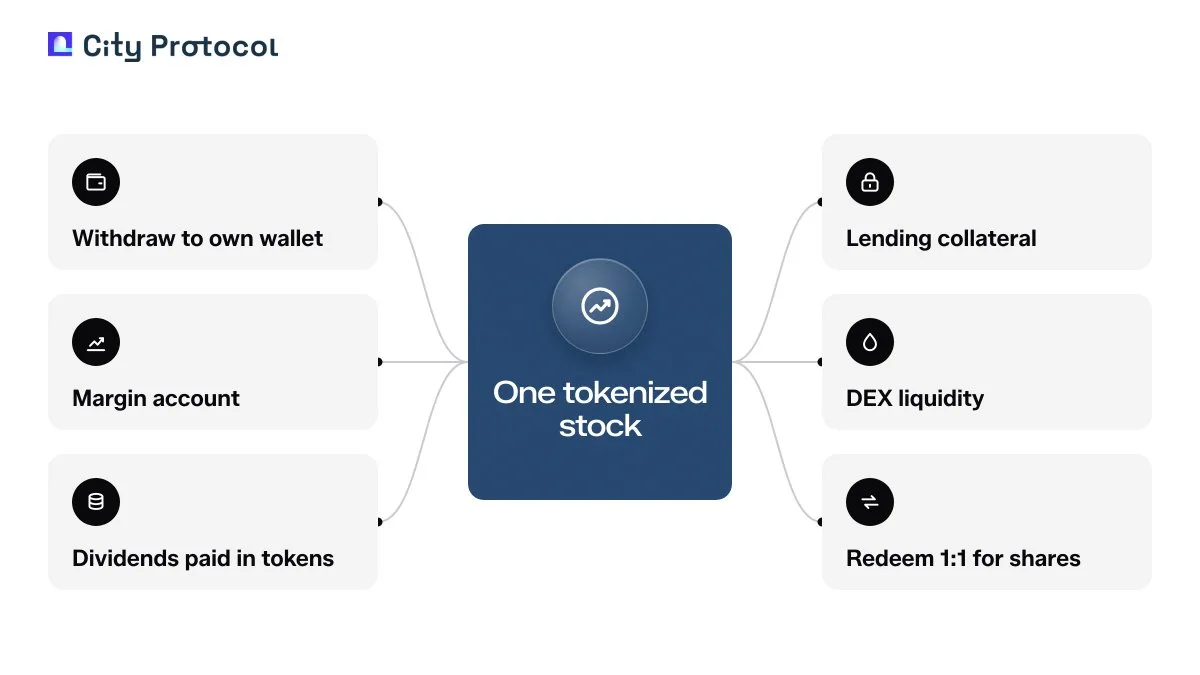
An onchain stock is a standard token, so other programs can use it directly. You can:
- Post it as collateral in a lending protocol and borrow against it
- Add it to a liquidity pool
- Bundle it with other assets into a basket
A share sitting in a brokerage account can't do any of that, however long the market stays open.
The rest of this piece follows that difference: what it's good for, and how far it has come.
1. The "Extra Seven Hours"
So how much do those seven hours really change? Law firm Jones Day looked at this in September and called it "an evolution."
The overnight session runs five times a week. In Eastern Time, the first opens at 9 p.m. Sunday and the last at 9 p.m. Thursday, and each runs until 4 a.m. the next morning. It really is a few more hours bolted onto the existing system. Only US broker members of the two exchanges can place orders, so retail investors have to open an account with one of those brokers first. Overnight trades don't count toward the day's closing price either.
At 8 p.m. on Friday, the exchanges shut completely and don't reopen until 9 p.m. Sunday. For those 49 hours, they can't take a single order.
The doors stay open longer, but the same people are walking through them.
Onchain, neither the broker requirement nor the weekend shutdown exists. People who can't open a US brokerage account can still trade onchain overnight, and onchain markets keep quoting prices through those 49 weekend hours.
According to Binance, 62% of trading in its tokenized stocks, bStocks, happened outside regular US market hours in July. That counts pre-market, after-hours, overnight, and weekend trading.
2. Onchain Tokens Are Growing
The tokens behind that trading are growing fast. According to RedStone, the supply of tokenized stocks onchain reached $3.17 billion as of September 28, up 395% in a year. The largest is bStocks, which passed $1 billion by mid-October.
bStocks are issued on BNB Chain. Each token is backed by one real share held by a custodian, and you can check them one by one on Binance's "Proof of Collateral" page. Once you hold them, you can withdraw them to your own wallet, deposit them into lending protocols like Venus or Lista to borrow, or add them to liquidity pools on decentralized exchanges like PancakeSwap.
Coinbase is issuing tokenized stocks too. Its first batch went live on its own Base chain on August 25, and the lending protocol Aave added them the same day.
This is the difference from the top of this piece. Withdrawing to a wallet, borrowing against your stocks and providing liquidity all need another program to reach the asset directly. Stocks in a brokerage account only move through the broker's own systems.
3. Programmable Stock Tokens Are Still Early
For all these uses, the numbers are still small. RedStone's September 28 data shows that about 42% of tokenized stock supply can be used as collateral. Only 2.6% of total supply is actually borrowed against, roughly $80 million.
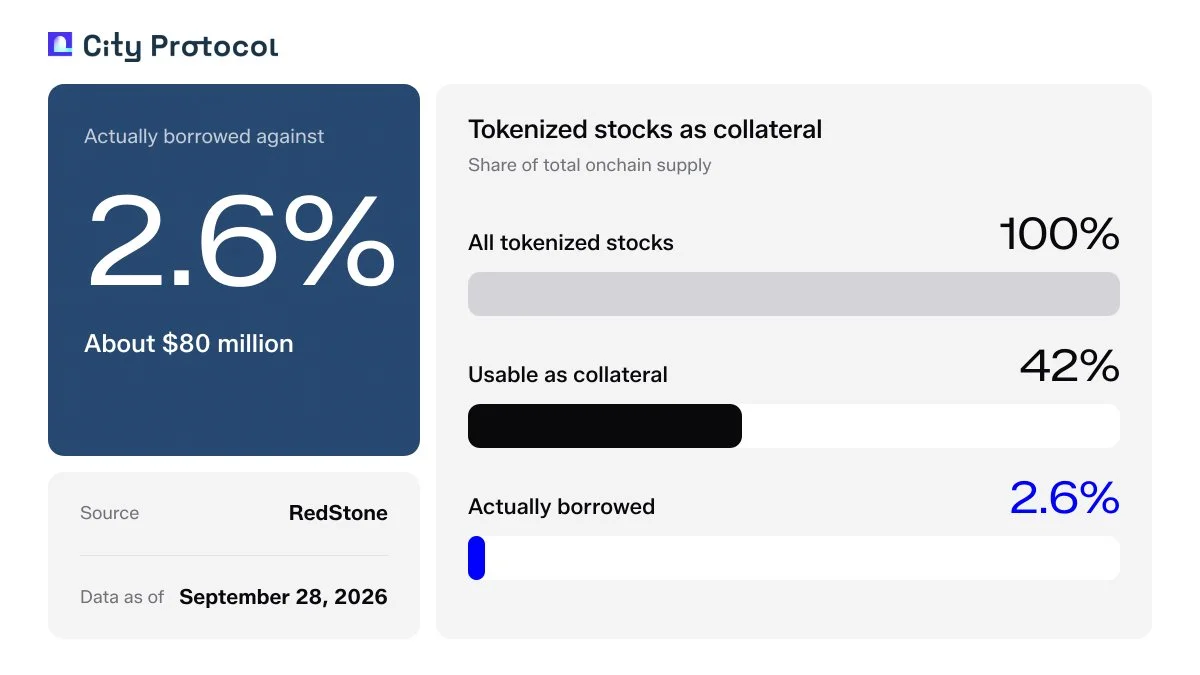
Part of the problem is pricing. Onchain markets keep quoting, but those quotes aren't treated as reliable, so once US markets close, lending protocols only accept prices in a narrow band around the closing price. Some tokens can only be minted and redeemed on US business days, and some issuers keep US users out entirely. These are engineering and regulatory problems that have to be solved one at a time.
In the end, whether usage grows depends on what people can build with these tokens.
4. Wall Street's Playbook Is Being Rebuilt Onchain
Wall Street's playbook is simple. Take one set of stocks and package it into different products for different buyers. The most basic product is a basket you buy in one go, so you don't have to pick winners. Selling call options on that basket and collecting the premiums adds a stream of cash. Leverage on the same basket makes both gains and losses bigger. Further out, there are thematic ETFs that pick stocks by theme, and copy-trading ETFs that follow famous investors' holdings.
Take the seven largest US tech companies by market cap. Roundhill built all three ideas around them in its Magnificent 7 ETF lineup: an equal-weight basket, a covered-call version and a 2x leveraged version.
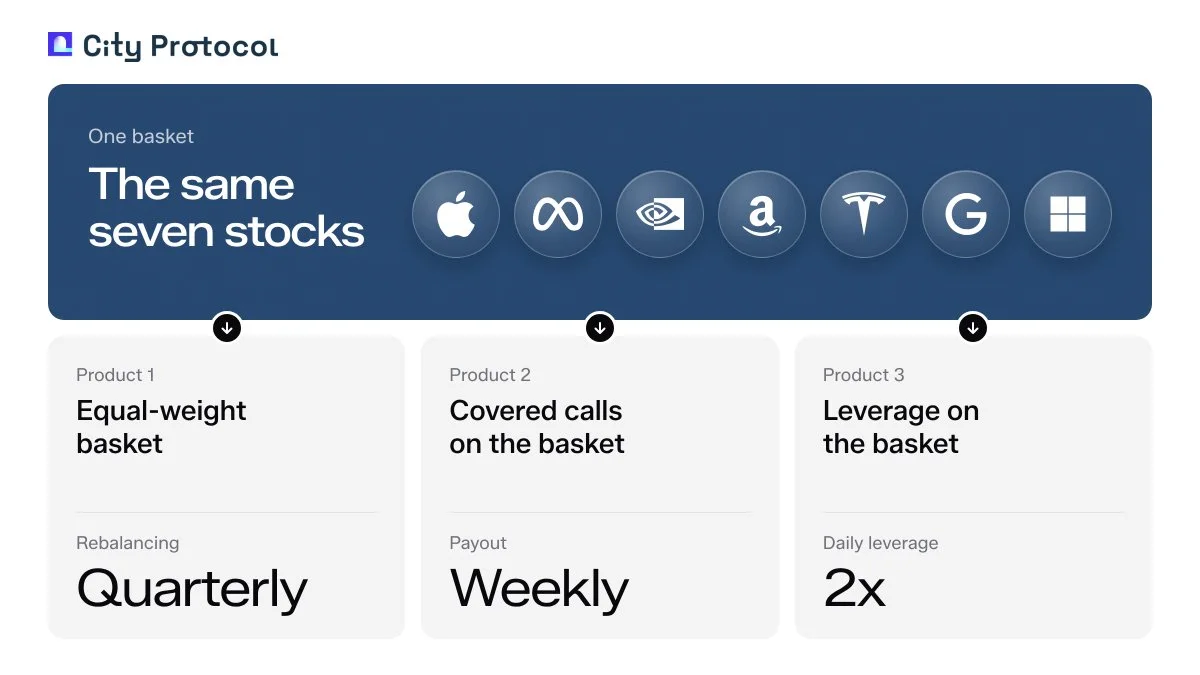
But every new product in that lineup goes through the whole launch process again. Registering the fund, signing up authorized participants, and arranging custody and market making each need their own legal and operational setup. Each one costs money, and smaller themes don't bring in enough assets to cover it.
That's exactly the problem City Protocol is solving with onchain stocks.
5. Moving Asset Baskets Onchain
ETFs are expensive to launch, and buying them has limits too. A regular investor can only buy ETF shares at market price on the secondary market. Creating or redeeming shares directly is left to large institutions with agreements with the fund, usually in blocks of 50,000.
Once you own an ETF, all you can check is the holdings list the fund publishes once a day. To meet tax diversification rules, some concentrated ETFs use swap contracts for part of their positions. Those swaps only pass through the stock's price moves, and the fund doesn't actually hold those shares.
City Protocol rebuilds this kind of product onchain.
It's called the Onchain Token Portfolio, or OTP. One transaction buys a whole basket of tokenized assets, which can include stocks as well as other real-world assets. Owning an OTP means holding the assets in the basket according to a set strategy.
Right now, OTPs cover three of those products: the basic basket, copy-trading and themes.
- Index OTPs track an index.
- Guru OTPs follow the publicly filed holdings of well-known investors.
- Thematic OTPs pick holdings around themes like AI chips, entertainment and medicine.
City Protocol's OTP technology takes those ETF barriers away entirely. You buy in with stablecoins and exit in a single transaction, with no authorized participants and no waiting for the market to open. The rules for when and how the basket changes are published in advance, and every rebalance can be checked onchain instead of in a daily fund report. For issuers, OTPs also make structured products much easier to launch on the technical side.
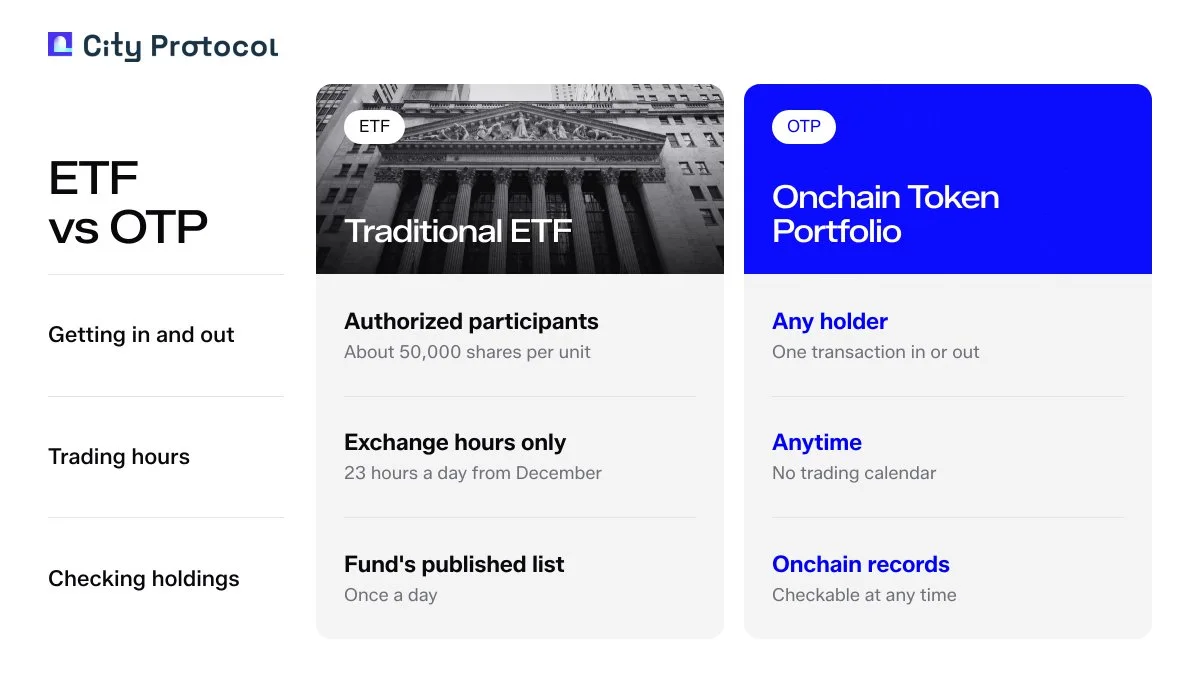
Think about earnings season. Many US companies report results after the 4 p.m. ET close, which is already 5 a.m. the next day in Beijing. After December, investors will get more time to trade US stocks on earnings nights. But the overnight session will still only take orders from US broker members and their clients.
OTP holders don't have to worry about who gets through the exchange's door. Buying the whole basket, or selling all of it at once, takes one onchain transaction.
6. More New Uses for Onchain Stocks
City Protocol isn't the only one. A lot of good dApps have found inventive uses for onchain stocks, taking them well beyond traditional markets and into practical new use cases.
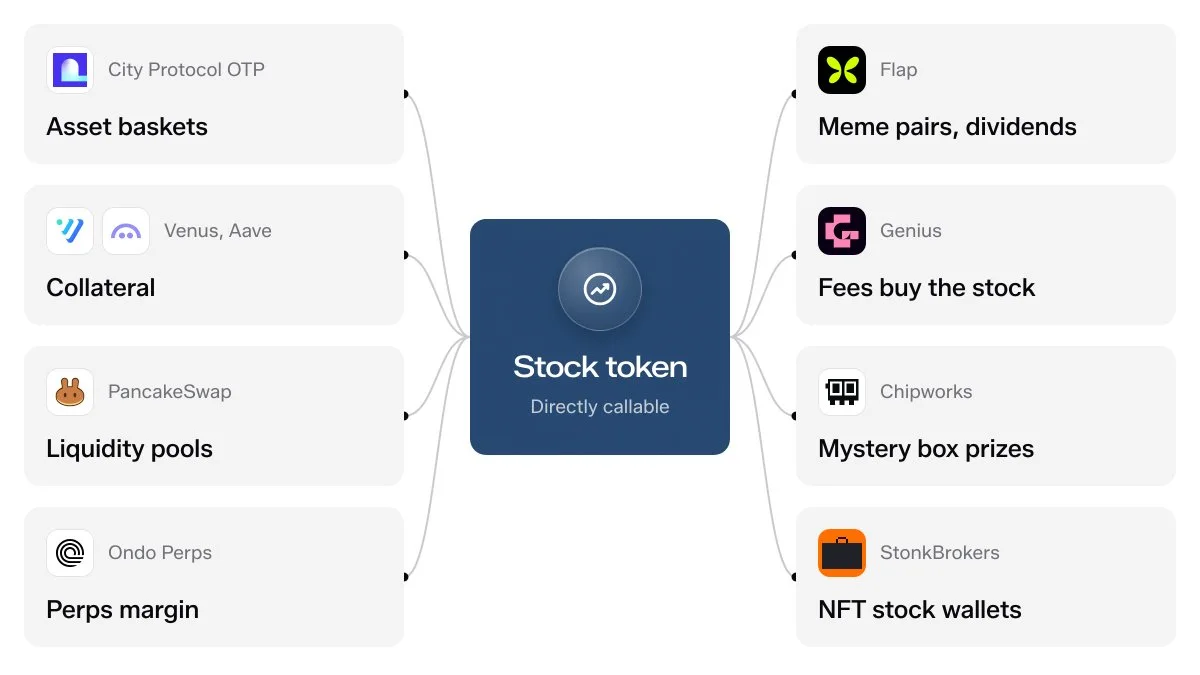
Flap, a meme launchpad on BNB Chain, uses onchain stocks as the base liquidity for meme launches. A creator launching a meme token on Flap can pick a tokenized stock like a bStock as its trading pair, so the meme is priced in that stock token. The same stock can also be set as the dividend asset, and meme holders then keep receiving stock tokens in proportion to their holdings. Some projects pay out their entire 3% buy/sell tax to holders in stock tokens. According to Flap's announcement, BNB Chain has also set aside $4 million in rewards for memes paired with bStocks.
Genius, another launchpad, went live in September and also pairs memes with tokenized stocks. It keeps buying the underlying stocks with part of its trading fees. Under Genius's rules, once enough of these tokenized stocks build up, the foundation will convert them back into real shares.
Stock tokens are also turning up as margin for derivatives. In July, Ondo Finance launched its perpetual futures platform, Ondo Perps, which lets traders post tokenized stocks directly as collateral to open positions. According to The Block, it's the first perpetuals platform to accept tokenized stocks as margin. Holders can use their shares as trading margin without selling them for stablecoins first.
Tokenized stocks have even become mystery box prizes. Chipworks on Base runs a mystery box called The Box. Users pay a small fee to pick and open a box, and what's inside is a Coinbase-issued tokenized stock. Every box is also an NFT, so it can be given away before it's opened. Chipworks runs raffles too, and only buys the prize stocks once every ticket has sold. Pyth Entropy generates the randomness for both, and the results can be checked onchain.
Some projects have put stock tokens inside NFTs. StonkBrokers on Robinhood Chain launched in July with a collection of pixel-art avatar NFTs. Using the ERC-6551 standard, each NFT has its own onchain wallet, which comes loaded with stock tokens at mint. Once holders activate them, the platform uses most of the fees from its trading pools to buy more stock tokens and keeps sending them into these NFT wallets. When an NFT is sold or transferred, its wallet and the stocks inside go to the new owner.
All of these uses rest on the same thing: the stock has become a standard token that other programs can use directly. Launchpads use it for base liquidity and dividends, derivatives platforms take it as margin, mystery boxes hand it out as prizes, and NFTs carry it in their own wallets. City Protocol bundles it into asset baskets.
7. From Programmable Stocks to Programmable Finance
US trading hours can keep getting longer, but they can't take away the fact that programs can use onchain stocks directly. Follow that difference far enough, and tokenizing stocks is just the start.
If stocks can become standard tokens, so can bonds, funds and other real-world assets. Once they're all onchain, code can run the whole process of turning them into products, from choosing assets and setting weights to rebalancing and settlement.
What comes next is fully programmable finance, and City Protocol has already built a model for it.
First, it recreates Wall Street's structured products by bringing the practice of packaging the same assets into different products onchain. Index baskets, copy-trading and thematic products are all there, and each can be bought in one transaction.
Second, it's much easier to get into. You don't need a brokerage account or an authorized participant, just stablecoins to buy in and cash out. What you get is the actual assets in the basket, held by you, and you can check every rebalance onchain.
On both counts, it goes beyond Wall Street's structured products. Maybe a future where all of finance is onchain and programmable isn't so far away after all.